
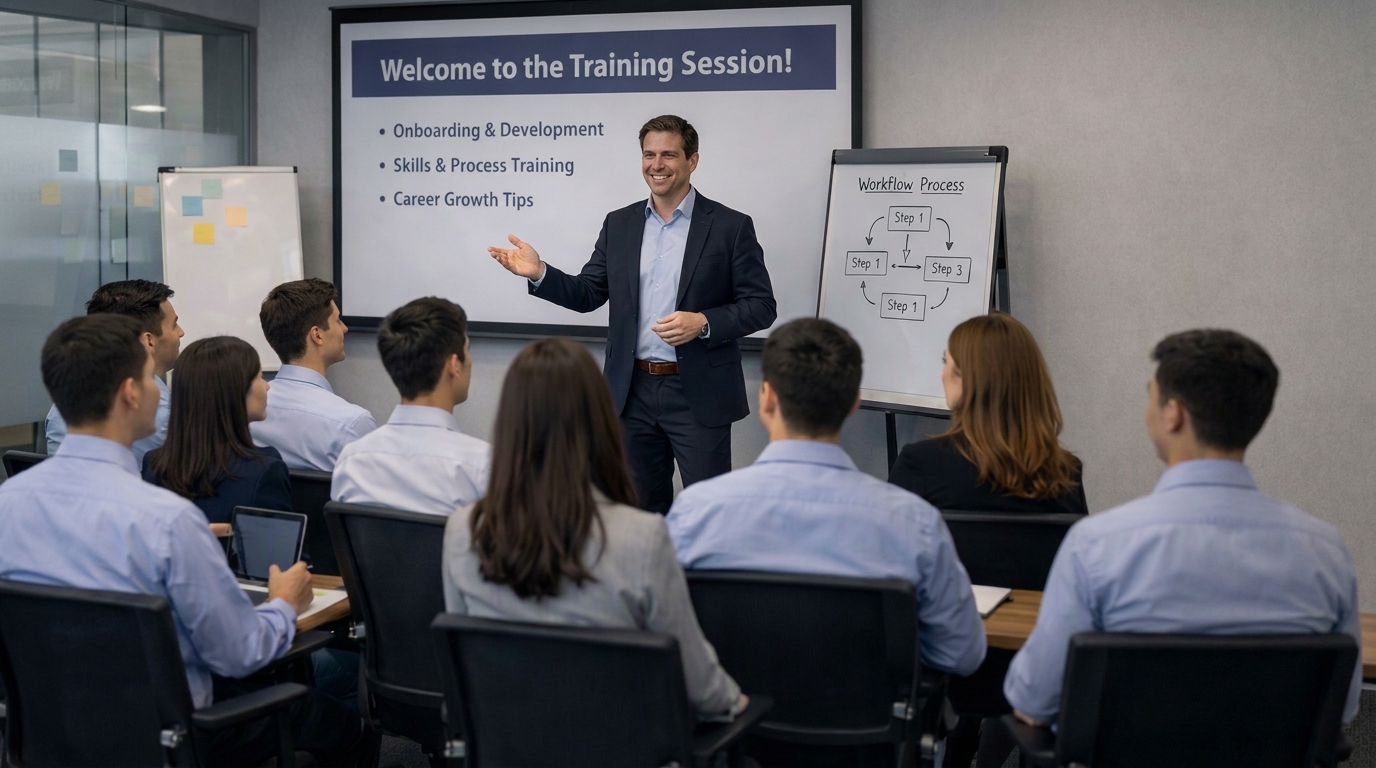
Who We Train
Students & Graduates
Looking for hands-on experience their curriculum didn't cover to bridge the gap between academia and industry.
Working Professionals
Adding AI, data, or advanced lab skills to an existing career to stay ahead in the rapidly evolving medical technology field.
Institutions & Clinics
Running cohort training for a team, department, or student batch with customised curricula for specific needs.
Our Elite Programmes
Immersive, practical courses designed to propel you to the forefront of biotechnology.
Reproductive & Clinical Sciences
Our core discipline. Taught by practising embryologists and clinical nutritionists.
biotech Embryology and ART
Gamete handling, fertilisation techniques, embryo culture systems, Day-3 and Day-5 morphological assessment, Gardner grading, cryopreservation, and IVF lab quality management. Includes structured practice in reading and scoring blastocyst images.
nutrition Clinical and Reproductive Nutrition
Nutritional physiology of fertility, dietary assessment, PCOS and metabolic management, protocol design for couples in treatment, and counselling practice.
AI for Life Sciences
For biology graduates who want computational skills, and computational people who want biological grounding.
-
Bioinformatics sequence analysis, genomic pipelines, working with public biological databases.
-
AI in Biotechnology image analysis, classification models, experimental data workflows.
-
Computational Genomics variant interpretation, population data, analysis pipelines.
-
Cheminformatics molecular docking, structure–activity analysis, screening workflows.
-
Machine Learning for Bio-Data model building, validation, and failure modes specific to small biological datasets.

Technology & Engineering
Core engineering skills adapted for healthcare and laboratory environments.
Computer Science & AI
Python, data structures, machine learning fundamentals, model deployment, working with real datasets end to end.
Cybersecurity
Network and systems security, healthcare data protection, secure architecture, threat monitoring, and compliance practice.
Electrical & Electronics
Embedded systems, IoT for laboratory and medical instrumentation, signal processing, sensor integration.
Mechanical Engineering
CAD and simulation, automation and robotics fundamentals, design for medical and laboratory equipment.
Download our complete Cybersecurity Training syllabus and see exactly what we cover, module by module.
Beyond the Syllabus
Every programme includes the critical soft skills and methodologies that conventional curricula usually skip:
- Technical communication and scientific writing
- Research methodology and literature review
- Presenting work to a technical audience
- Interview preparation and portfolio building
- A capstone project you can show an employer
Programme Structure
Frequently Asked Questions
Do I need a background in coding?
No. The AI for life sciences track starts from first principles and assumes a biology background, not a programming one.
Is training hands-on?
Yes. Every programme is built around a project you complete and keep.
Can my college or clinic run a batch?
Yes. We deliver cohort programmes on-site or online for institutions, sized to your group.
Who teaches?
Practising embryologists, AI researchers, and engineers from our team and consulting network — not career trainers.
Do you offer placement?
We provide portfolio and interview preparation. We do not guarantee placement, and you should be sceptical of anyone who does.
Ready to Master Your Field?
Send us your background and goal, and we'll point you to the right programme or tell you honestly if we're not the right fit.
Enquire about training