
PCOS MANAGEMENT: AN EVIDENCE-BASED GUIDE TO NUTRITION, LIFESTYLE, METABOLIC AND REPRODUCTIVE HEALTH
A practical, science-based guide to understanding PCOS, healthy eating patterns, and long-term lifestyle change
INTRODUCTION
Polycystic ovary syndrome (PCOS) can affect far more than the menstrual cycle. For some women, the first concern is irregular periods; for others, acne, unwanted facial hair, hair thinning, difficulty with weight management, metabolic abnormalities, or challenges with ovulation and fertility may be more prominent.
What makes PCOS particularly challenging is that it does not look the same in every woman. One person may have irregular cycles and acne with a lower body weight, while another may experience metabolic complications and higher body weight. Some women have significant androgen-related symptoms, while others have relatively subtle symptoms.
This is why effective PCOS Management should not revolve around one symptom—or around weight alone. The current international evidence-based guideline places healthy lifestyle, metabolic health, emotional wellbeing, symptom management and individualized medical care at the centre of PCOS management. Importantly, healthy lifestyle changes can provide benefits even when weight loss does not occur.
WHAT IS PCOS?
PCOS is a common endocrine and metabolic condition involving reproductive, hormonal and metabolic features. Diagnosis is based on appropriate clinical assessment rather than simply finding "cysts" on the ovaries.
In adults, the diagnostic framework generally considers three major features:
- Ovulatory dysfunction, often reflected by irregular menstrual cycles
- Clinical or biochemical hyperandrogenism
- Polycystic ovarian morphology on ultrasound or, in appropriate circumstances, anti-Müllerian hormone (AMH)
A diagnosis does not require all three features, and ovarian morphology alone does not establish PCOS. Other conditions that can produce similar symptoms may also need to be excluded.
Because PCOS is heterogeneous, treatment should be based on the individual's symptoms, metabolic risk, reproductive plans, preferences and overall health.
COMMON PCOS SYMPTOMS
Possible manifestations include:
- Irregular or infrequent menstrual periods
- Problems with ovulation
- Acne or oily skin
- Increased facial or body hair
- Scalp hair thinning
- Changes in body weight or difficulty with weight management
- Impaired glucose regulation
- Abnormal lipid levels
- Psychological distress, anxiety or depressive symptoms
Not every woman experiences all of these features. Symptoms can also change over time.
PCOS AND METABOLIC HEALTH
PCOS is associated with an increased risk of metabolic abnormalities, including insulin resistance, impaired glucose regulation and dyslipidaemia. However, insulin resistance should not be treated as a universal explanation for every woman with PCOS.
The international guideline recognises insulin resistance as part of PCOS pathophysiology but notes that routinely available insulin assays have limited clinical usefulness and are not recommended for routine assessment.
This distinction matters because PCOS management should focus on clinically meaningful outcomes rather than chasing a single laboratory value.
Depending on the individual, healthcare professionals may assess blood glucose, lipid profile, blood pressure, body composition and other cardiometabolic risk factors.
THE ROLE OF NUTRITION IN PCOS MANAGEMENT
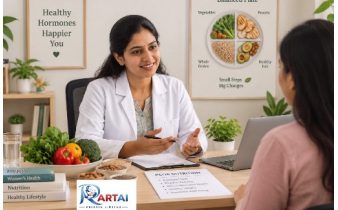
There is no single PCOS Diet that has been shown to be superior for all women.
The 2023 international guideline specifically states that there is insufficient evidence that one dietary composition is better than another for anthropometric, metabolic, hormonal, reproductive or psychological outcomes. Instead, healthy eating should follow general dietary principles while being adapted to individual preferences, nutritional needs and goals.
A practical Healthy Diet for PCOS can include:
- Adequate protein from dal, beans, eggs, fish, chicken, curd, paneer, tofu or other suitable sources
- Plenty of vegetables
- Whole fruits rather than relying on juices
- Pulses and legumes
- Whole or minimally refined grains where preferred
- Nuts and seeds in appropriate portions
- Unsaturated sources of dietary fat
- Adequate hydration
- Fewer highly processed foods and sugar-sweetened beverages
The aim is not to create a highly restrictive diet. Nutritional adequacy and sustainability matter.
CARBOHYDRATES AND PCOS
Carbohydrates are often unnecessarily blamed for PCOS.
The more useful approach is to consider carbohydrate quality, quantity and meal composition. Fibre-rich carbohydrates such as pulses, vegetables, whole grains and appropriately portioned traditional staples can fit comfortably into a balanced diet.
For example, rice does not need to be eliminated. A meal containing a moderate portion of rice alongside dal, vegetables, curd and a protein source may be nutritionally balanced.
Pairing carbohydrate-containing foods with protein, fibre and healthy fats can also make meals more satisfying and improve overall dietary quality.
The goal is not "zero carbohydrates." It is a balanced eating pattern that can be followed consistently.
PCOS AND WEIGHT MANAGEMENT
The relationship between PCOS and body weight is complex.
PCOS occurs across a broad range of body sizes, and not every woman with PCOS needs to lose weight. Weight-inclusive care may be particularly appropriate when the primary goals are metabolic health, physical fitness, symptom management and prevention of future weight gain.
For women at a higher weight who choose weight management as one of their goals, even modest weight reduction may be associated with meaningful health improvements. The guideline also recommends considering changes in central adiposity and metabolic health rather than judging progress only by body weight.
Most importantly, PCOS and Weight Management should never become a source of shame. Weight stigma can negatively affect healthcare experiences and may make people less likely to seek appropriate care.
PHYSICAL ACTIVITY: MORE THAN CALORIE BURNING
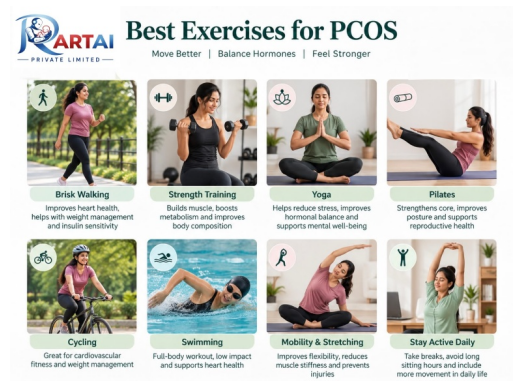
Exercise is an important component of Lifestyle Management for PCOS, regardless of whether weight loss is a goal.
A balanced activity programme may include:
- Brisk walking
- Cycling, swimming or other aerobic exercise
- Resistance training
- Mobility and flexibility work
- Regular everyday movement
- Reducing prolonged sitting
Resistance training deserves particular attention because maintaining muscle mass and strength supports metabolic health and physical function.
The international guideline recommends physical activity for all women with PCOS and notes that different forms of exercise can be beneficial. For adults, general activity targets include 150–300 minutes of moderate-intensity aerobic activity per week, alongside muscle-strengthening activity on at least two days per week. Higher activity volumes may be useful when the goal includes modest weight loss or preventing weight regain.
The best exercise programme is one that is safe, enjoyable and realistic enough to continue.
SLEEP, STRESS AND EMOTIONAL WELLBEING
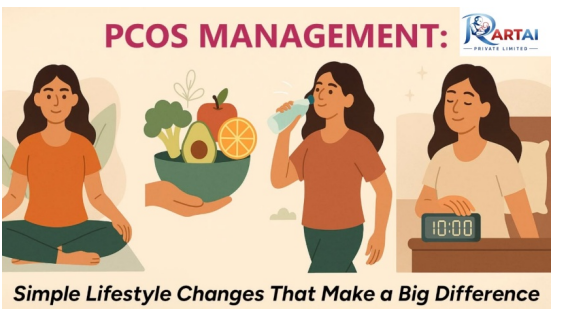
PCOS management extends beyond food and exercise.
Sleep problems are relatively common in PCOS, and the international guideline highlights the importance of assessing sleep-related concerns, including obstructive sleep apnoea when clinically indicated. Psychological wellbeing is also an important part of comprehensive care.
Poor sleep and chronic stress can make healthy routines harder to maintain. They may affect appetite, food choices, energy levels, exercise participation and emotional wellbeing.
Practical measures include maintaining a regular sleep schedule, creating a consistent evening routine, taking movement breaks during stressful days, practising relaxation techniques, and seeking professional psychological support when needed.
These strategies should be viewed as supportive components of PCOS and Hormonal Health, rather than as miracle methods for "balancing hormones."
COMMON PCOS MANAGEMENT MISTAKES
- Eliminating carbohydrates completely: There is no need to remove all carbohydrates simply because you have PCOS.
- Following extreme diets: Highly restrictive diets can be nutritionally inadequate and difficult to sustain.
- Depending on detox drinks: Detox beverages have no established role as a treatment for PCOS.
- Taking multiple supplements: Supplements are not automatically harmless or necessary. Their usefulness depends on individual nutritional status and clinical circumstances.
- Believing there is one perfect PCOS diet: Current evidence does not support one dietary composition as universally superior.
- Measuring success only through weight: Periods, metabolic markers, physical fitness, symptoms, emotional wellbeing and quality of life can all be important outcomes.
- Self-treating without medical assessment: Persistent menstrual irregularity, significant androgen-related symptoms or fertility concerns deserve appropriate medical evaluation.
SUSTAINABLE PCOS MANAGEMENT STRATEGIES
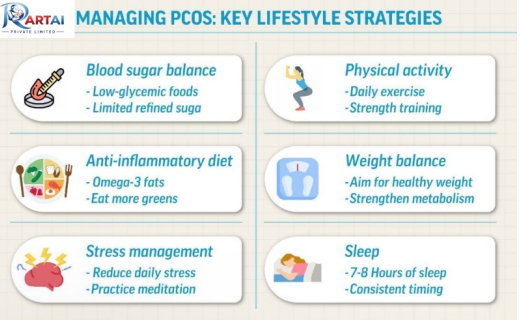
A practical approach is to build several manageable habits rather than attempting a complete lifestyle overhaul overnight.
- Start with balanced meals. Include protein, vegetables or fruit, fibre-rich carbohydrates and appropriate fats.
- Make movement routine. Regular walking combined with resistance training can be a strong foundation.
- Prioritise sleep. A consistent sleep-wake schedule can support overall health and daily functioning.
- Set realistic goals. Behavioural goals—such as exercising three times per week or adding vegetables to lunch and dinner—are often more actionable than focusing exclusively on a target weight.
- Track meaningful outcomes. Depending on the individual, this may include menstrual regularity, waist circumference, glucose markers, lipid profile, fitness, symptoms or quality of life.
- Expect imperfect weeks. Sustainable management is about returning to healthy routines rather than trying to maintain perfection.
The international guideline supports goal-setting, self-monitoring, problem-solving and relapse-prevention strategies as useful behavioural components of PCOS care.
PCOS NUTRITION IN THE INDIAN CONTEXT
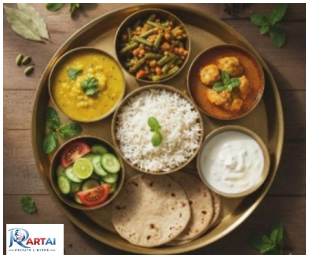
Managing PCOS does not require expensive imported "PCOS foods."
A balanced Indian meal can be built from familiar foods:
- Breakfast: vegetable dosa with sambar, or idli with sambar and curd.
- Lunch: rice or roti with dal, vegetables, curd and an appropriate protein source.
- Snack: fruit with a small portion of nuts, roasted chana or unsweetened curd.
- Dinner: chapati with vegetable curry and dal, paneer, tofu, eggs, fish or chicken according to dietary preference.
Millets can be included, but they are not mandatory. Rice can also be included. Traditional foods become more compatible with healthy eating when attention is given to portions, cooking methods, meal composition and dietary variety.
There is no need to purchase costly "hormone-balancing" products when nutritious, locally available foods can provide the foundation of a healthy diet.
PCOS, OVULATION AND REPRODUCTIVE HEALTH
PCOS is one of the common causes of ovulatory dysfunction and can contribute to difficulty becoming pregnant. However, PCOS does not mean infertility.
Many women with PCOS conceive naturally, while others may require medical assistance to restore or support ovulation.
If pregnancy is desired, management should shift toward preconception health. The international guideline recommends attention to nutrition, physical activity, sleep, blood pressure, metabolic health, mental wellbeing and other modifiable risk factors before pregnancy.
Persistent menstrual irregularity also deserves medical attention because prolonged untreated amenorrhoea can increase the risk of endometrial hyperplasia.
WHEN PROFESSIONAL GUIDANCE IS IMPORTANT

PCOS management often works best as a collaborative process.
- A gynecologist may assess menstrual irregularity, androgen-related symptoms and reproductive concerns.
- An endocrinologist or physician may be appropriate when significant metabolic or endocrine issues are present.
- A Registered Dietitian or qualified nutrition professional can help develop an individualized eating pattern that is nutritionally adequate and realistic.
Medical treatment may also be appropriate. Depending on symptoms and goals, clinicians may consider treatments such as combined oral contraceptives for menstrual irregularity and hyperandrogenic symptoms, metformin for appropriate metabolic indications, or fertility treatments when pregnancy is desired. These decisions require individualized medical assessment rather than self-medication.
FREQUENTLY ASKED QUESTIONS
Can PCOS be managed without losing weight?
Yes. Healthy lifestyle changes can improve health and quality of life even without weight loss. The international guideline specifically recognises benefits from healthy lifestyle intervention independent of weight reduction.
Is there one specific PCOS diet?
No. Current evidence does not establish one dietary composition as superior for every woman with PCOS. A sustainable healthy eating pattern tailored to personal preferences and needs is recommended.
Should women with PCOS avoid rice?
No. Rice can be included in a balanced diet. Portion size, meal composition, dietary variety and overall eating habits are more important than completely eliminating one staple food.
Are carbohydrates bad for PCOS?
No. Carbohydrates are an important source of energy and can be part of a healthy diet. Choosing fibre-rich sources and balancing portions with protein and vegetables is generally more useful than eliminating carbohydrates.
Can exercise help manage PCOS?
Yes. Physical activity can support metabolic health, body composition, fitness and quality of life, whether or not weight loss occurs.
Can women with PCOS become pregnant?
Yes. PCOS can interfere with ovulation, but it does not automatically mean infertility. Appropriate medical evaluation can identify suitable options when pregnancy is desired.
CONCLUSION
There is no single food, supplement, workout or weight target that defines successful PCOS Management.
The most effective approach is individualized: understand the symptoms, assess metabolic and reproductive health, build sustainable nutrition and activity habits, support sleep and emotional wellbeing, and use medical treatment when clinically appropriate.
For some women, weight management will be an important part of care. For others, the priority may be menstrual health, metabolic risk reduction, fertility, acne, unwanted hair growth, fitness or psychological wellbeing.
A Healthy Diet for PCOS does not need to be restrictive, expensive or disconnected from everyday Indian food. Rice, roti, dal, vegetables, curd, fruits, millets and other traditional foods can all have a place in a balanced dietary pattern.
PCOS is a long-term condition, but it does not have to define a woman's health or future.
The goal is not perfection. The goal is informed, sustainable care that supports the whole person—her metabolic health, menstrual health, reproductive goals, physical wellbeing and quality of life.
REFERENCES
- Teede HJ, et al. Recommendations from the 2023 International Evidence-based Guideline for the Assessment and Management of Polycystic Ovary Syndrome. American Society for Reproductive Medicine / Monash University. 2023.
- Teede HJ, et al. International Evidence-based Guideline for the Assessment and Management of Polycystic Ovary Syndrome. Monash University. 2023.
- Moran LJ, et al. Evidence summaries and recommendations from the international evidence-based guideline for the assessment and management of polycystic ovary syndrome: Lifestyle management. 2023.
- American Society for Reproductive Medicine. Recommendations from the 2023 International Evidence-based Guideline for the Assessment and Management of Polycystic Ovary Syndrome.